“If the future in freedom does not exist, we shall invent it!”
UNFES

ENGLISH: Union of Feminists Engendering New Systems (UNFES)
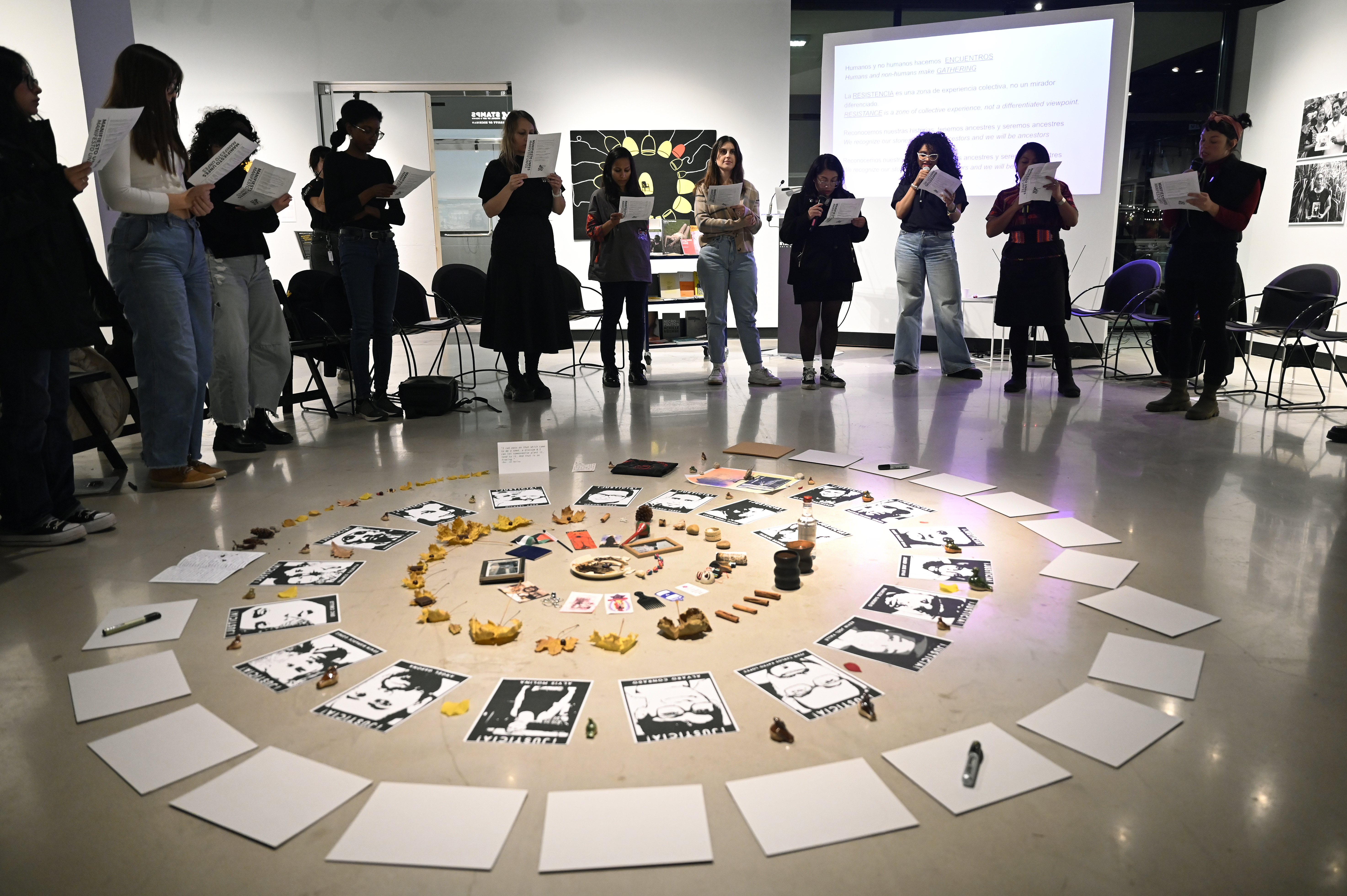
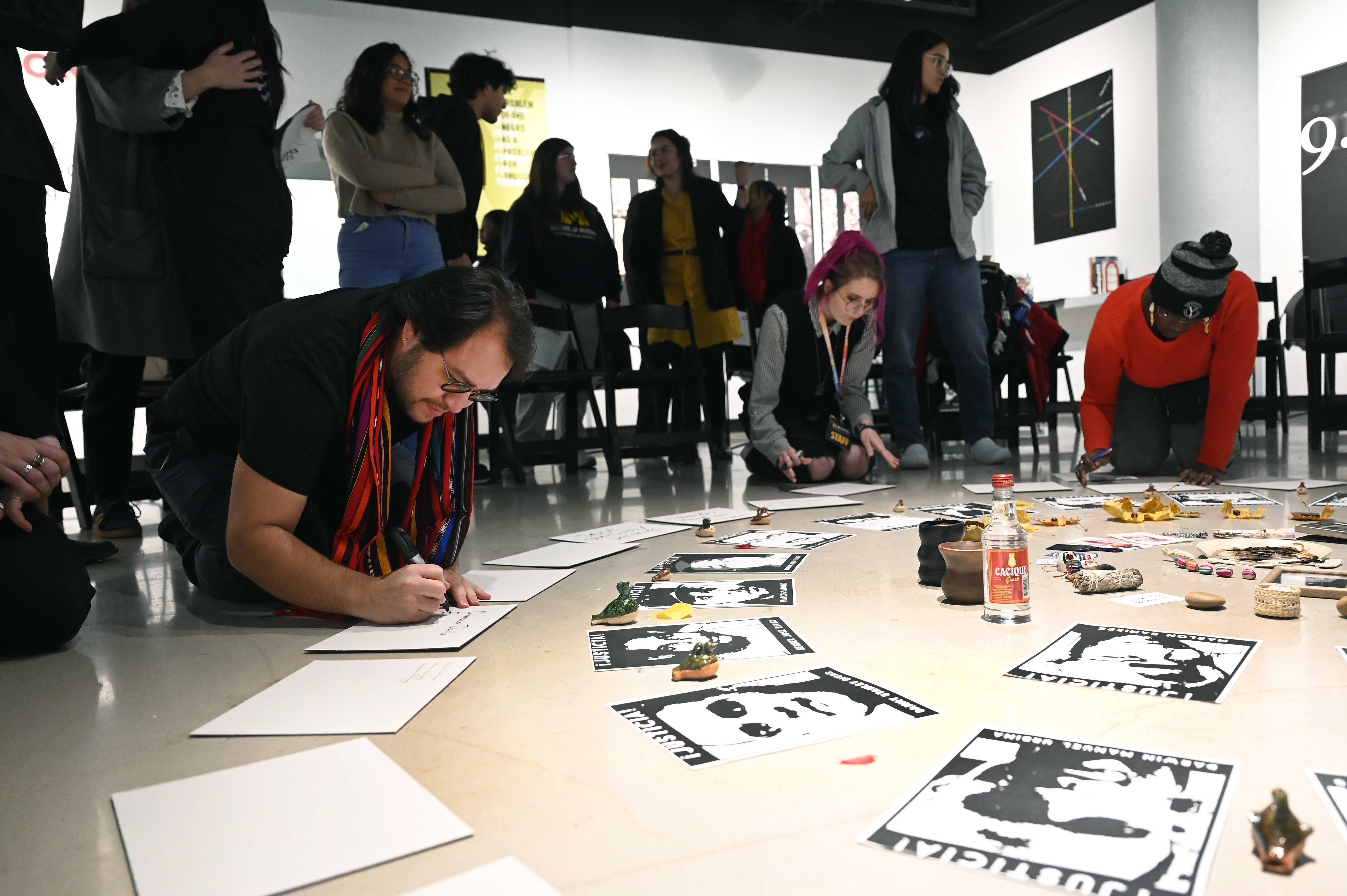
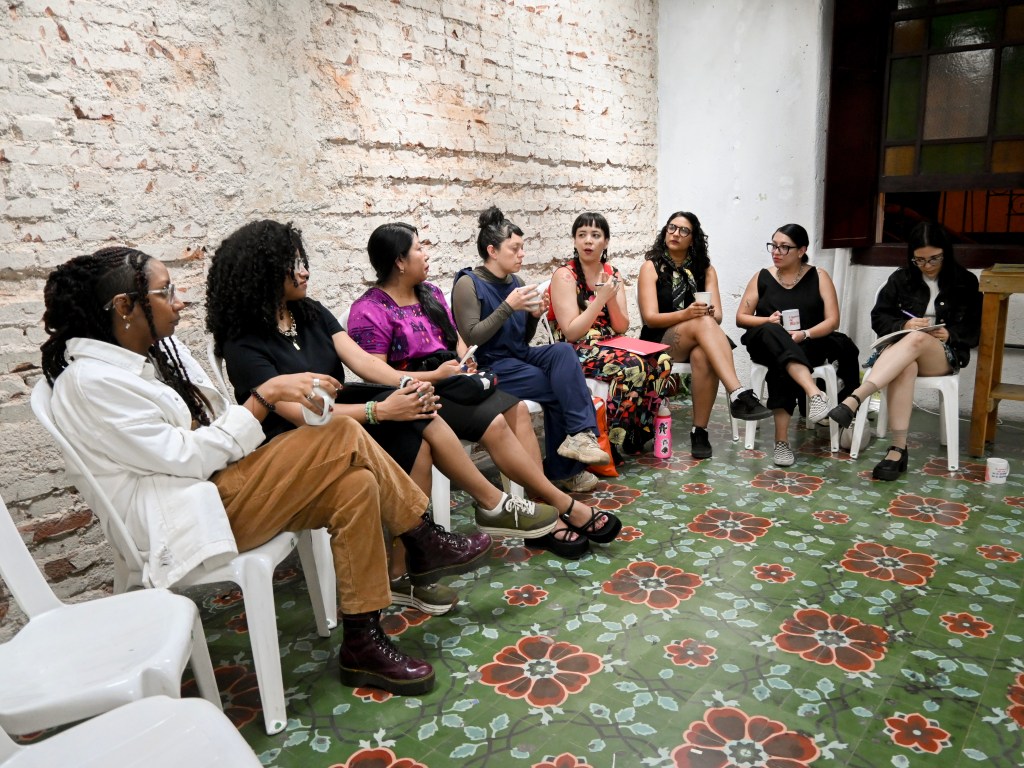
Historically, Central American feminists artists have been systematically erased from traditional art archives and narratives. That has prevented us from creating our own identity and history. We rescue the memory of the people. The system has insisted on keeping us isolated. We created this union as a space for gathering, acuerpamiento our bodies and our territories from Central America.

We name the system as a network of violence. We seek the expansion of justice, that all living beings (human and non-human) are treated with dignity and respect, we use art as the main weapon for the abolition of patriarchy, racism and colonialism. Our motto is: “If the future in freedom does not exist, we shall invent it!” “We do not come to recover anything, we only come to remind you that it has always been ours.”

This project shines a light on how Central American women confront violence with innovative forms of resistance and the imaginaries of the future that emerge from these interventions. The project will convene decolonial feminist artists and activists working on social, racial and gender justice with interests in issues of memory, territory, healing processes through art and the future across Central America to foster artistic collaborations, conversations and a collective research project. Curated by Guatemalan Curator Maya Juracan and Nicaraguan artist/researcher Emilia Yang.

This project is co-sponsored by The Arts Initiative, Arts & Resistance, LSA, the Institute for Research on Women and Gender (IRGW), the Stamps School of Art & Design and an Arts for Gender Equality Fellowship awarded by the Rockefeller Foundation and CARE.

This is part of my Transborder Feminist Portals Multi-Year project.



PARTICIPATING ARTISTS AND CURATORS
Maya Juracan is a Guatemalan curator, activist, and educator interested in using art as a tool to change traditional historical narratives. She is curator of the “En Resistencia Biennial.” Maya co-created the feminist collective of curators “La Revuelta”, which theorizes and practices feminist community curating.
Emilia Yang is a Central American artist, designer, organizer and researcher. Her work explores the role of memory, violence, emotions, performance and participation in the political imagination. His works have been exhibited in international spaces such as the Resistance Biennial in Guatemala, the Legislative Assembly of Costa Rica, the Museum of Jade and Pre-Columbian Culture in Costa Rica, Casa América and the Neomudéjar Avant-garde Museum and Art Center in Spain , Le Commun Contemporary Art Building in Geneva, Unity for Humanity, IndieCade Independent Games Festival, Games for Change, Electronic Entertainment Expo (E3) and Games and the New Media Summit at the Tribeca Film Festival. She is currently an Assistant Professor of Art and Design at the Penny W. Stamps School of Art and Design at the University of Michigan.
Marilyn Boror Bor is an indigenous Mayan-Kaqchikel artist from Guatemala, who questions his context and dialogues in opposition to patriarchal and racist visions through drawing, painting, photography, graphics, installation and performance. Artist selected to participate in the São Paulo Biennial 2023; Southern Biennial Buenos Aires Argentina 2022; the 19, 20, 22 and 23 Paiz Guatemala Art Biennial; The Biennial in Resistance Guatemala 2018 and 2022; and Southern Biennial “Peoples in Resistance” Caracas, Venezuela. Her work is part of the “Vasos Comunicantes” collection of the Reina Sofía Museum Madrid Spain and the Il posto Collection, Santiago de Chile.
Ana Laguna is a Panamanian cultural programmer and curator. She is the first and youngest black curator to work on the permanent team of the Museum of Contemporary Art of Panama. She worked as a research assistant for the exhibition “Tudo o que eu quero” at the Calouste Gulbenkian Museum in Lisbon, as a curatorial assistant at Kunsthalle Lissabon and in the Public Programs team at the Museo Nacional Centro de Arte Reina Sofía. She is currently an advisor on curatorship and cultural public policies at the Ministry of Culture of her country.
Gabriela Novoa Salvadoran independent artist and filmmaker. Her works explore women’s bodies based on the context from political and feminist approaches along with all their structures of power, violence and submission towards them, building a space for questioning and dialogue, narrated from the body and poetry as a aesthetic-political strategy.
Mariela Richmond-Vargas She is a Costa Rican art educator and weaver of collaborative processes. She is part of different groups: #LasHartas in relation to feminist artivism; #La Ruidosa Oficina, on community education processes, and #Escuela De La Tierra, on knowledge and practices of Organic Agriculture. She is co-founder of the Laboratorio Memoria de las Artes Escénicas (LAMAE), a research, archiving and teaching center for scenic design, with 10 years of work in San José, Costa Rica. She is currently a professor at the Schools of Plastic Arts and Performing Arts at the University of Costa Rica and coordinates the visual exploration group LA EFE of Artistic Practices.
Nara Ila is an artist and facilitator with ties and responsibilities to their communities, queer and displaced people from Nicaragua, the global south and diasporas. Queerness, grief, and ecology inform her practice. They collaborates transnationally, are currently working with a creation and research grant from the Canada Council for the Arts, and misses their dogs every day.
Risseth Yangüez Singh visual artist from Panama. Her works intertwine the questioning and investigation of personal and collective memory that lead to the reappropriation of the discourses, images and narratives imposed by the system. She has participated in multiple group art exhibitions at the University of Panama, Museum of Contemporary Art of Panama, Paiz Art Biennial in Guatemala and Paris. In addition to film festivals and workshops in Panama, Colombia, Costa Rica and Cuba.

ESP: UNFES X LaRevuelta, festival de arte feminista en Ciudad de Guatemala, 2024
“We do not come to recover anything, we only come to remind you that it has always been ours.”
UNFES
“No venimos a recuperar nada, sólo venimos a recordarles que siempre ha sido nuestro”.
UNFES



“¡Si el futuro en libertad no existe, lo inventaremos!”
UNFES
ESPAÑOL: UNION DE FEMINISTAS ENGENDRANDO NUEVOS SISTEMAS
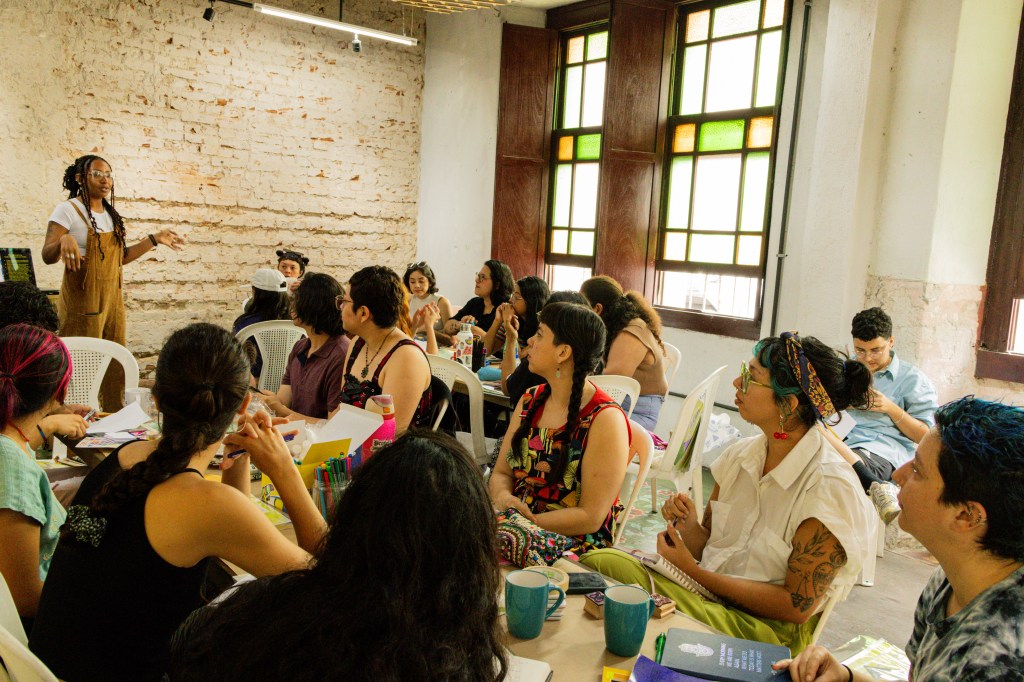
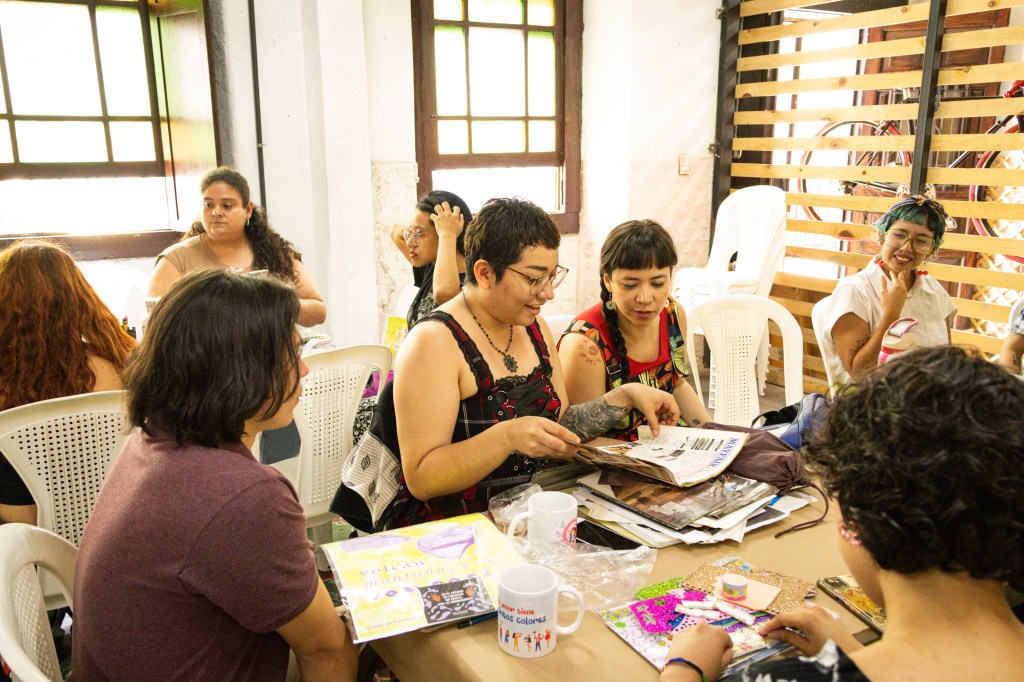
Históricamente, las artistas feministas centroamericanas han sido borradas sistemáticamente de los archivos y narrativas de arte tradicionales. Eso nos ha impedido crear nuestra propia identidad e historia. Rescatamos la memoria del pueblo. El sistema ha insistido en mantenernos aislados. Creamos esta unión como un espacio de encuentro, uniendo nuestros cuerpos y nuestros territorios desde Centroamérica.

Llamamos al sistema una red de violencia. Buscamos la ampliación de la justicia, que todos los seres vivos (humanos y no humanos) sean tratados con dignidad y respeto, utilizamos el arte como arma principal para la abolición del patriarcado, el racismo y el colonialismo. Nuestro lema es: “¡Si el futuro en libertad no existe, lo inventaremos!” “No venimos a recuperar nada, sólo venimos a recordarles que siempre ha sido nuestro”.

Este proyecto arroja luz sobre cómo las mujeres centroamericanas enfrentan la violencia con formas innovadoras de resistencia y los imaginarios de futuro que emergen de estas intervenciones. El proyecto convocará a artistas y activistas feministas decoloniales que trabajan en la justicia social, racial y de género con intereses en temas de memoria, territorio, procesos de curación a través del arte y el futuro en toda Centroamérica para fomentar colaboraciones artísticas, conversaciones y un proyecto de investigación colectiva. Curada por la curadora guatemalteca Maya Juracan y la artista/investigadora nicaragüense Emilia Yang.

Este proyecto está copatrocinado por The Arts Initiative, Arts & Resistance, LSA, el Institute for Research on Women and Gender (IRGW), la Stamps School of Art & Design y una beca Arts for Gender Equality otorgada por la Fundación Rockefeller y CARE. .

Esto es parte de mi proyecto multi-anual Portales Feministas Transfronterizos.
ARTISTAS Y CURADORAS PARTICIPANTES
Maya Juracan es una curadora, activista y educadora guatemalteca interesada en utilizar el arte como herramienta para cambiar las narrativas históricas tradicionales. Es curadora de la “Bienal En Resistencia”. Maya co-creó el colectivo feminista de curadoras “La Revuelta”, que teoriza y practica la curaduría comunitaria feminista.
Emilia Yang es una artista, diseñadora, organizadora e investigadora centroamericana. Su trabajo explora el papel de la memoria, la violencia, las emociones, la performance y la participación en la imaginación política. Sus obras han sido exhibidas en espacios internacionales como la Bienal de la Resistencia en Guatemala, la Asamblea Legislativa de Costa Rica, el Museo del Jade y la Cultura Precolombina en Costa Rica, Casa América y el Museo y Centro de Arte de Vanguardia Neomudéjar en España, Le Commun Edificio de Arte Contemporáneo en Ginebra, Unity for Humanity, IndieCade Independent Games Festival, Games for Change, Electronic Entertainment Expo (E3) y Games y el New Media Summit del Tribeca Film Festival. Actualmente es profesora adjunta de Arte y Diseño en la Escuela de Arte y Diseño Penny W. Stamps de la Universidad de Michigan.
Marilyn Boror Bor es artista indígena maya-kaqchikel de Guatemala, que cuestiona su contexto y dialoga en oposición a visiones patriarcales y racistas a través del dibujo, la pintura, la fotografía, la gráfica, la instalación y la performance. Artista seleccionada para participar en la Bienal de São Paulo 2023; Bienal Sur Buenos Aires Argentina 2022; la 19, 20, 22 y 23 Bienal de Arte Paiz Guatemala; La Bienal en Resistencia Guatemala 2018 y 2022; y Bienal del Sur “Pueblos en resistencia” Caracas, Venezuela. Su obra forma parte de la colección “Vasos Comunicantes” del Museo Reina Sofía Madrid España y de la Colección de Il posto, Santiago de Chile.
Gabriela Novoa, artista y cineasta independiente salvadoreña. Sus obras exploran el cuerpo de las mujeres en base al contexto desde planteamientos políticos y feministas junto a todas sus estructuras de poder, violencia y sometimiento hacia las mismas, construyendo un espacio de cuestionamiento y diálogo, narrado desde el cuerpo y la poesía a modo de estrategia estético-política.
Ana Laguna es una programadora cultural y curadora panameña. Es la primera y más joven curadora negra que trabajó en el equipo permanente del Museo de Arte Contemporáneo de Panamá. Trabajó como asistente de investigación para la exposición “Tudo o que eu quero” del Museo Calouste Gulbenkian en Lisboa, como asistente curatorial en Kunsthalle Lissabon y en el equipo de Programas Públicos del Museo Nacional Centro de Arte Reina Sofía. Actualmente es asesora de curaduría y políticas públicas culturales del Ministerio de Cultura de su país.
Mariela Richmond-Vargas es educadora de arte costarricense y tejedora de procesos colaborativos. Forma parte de diferentes colectivos: #LasHartas en relación al artivismo feminista; #La Ruidosa Oficina, sobre procesos de educación comunitaria, y #Escuela De La Tierra, sobre conocimientos y prácticas de Agricultura Orgánica. Es co-fundadora del Laboratorio Memoria de las Artes Escénicas (LAMAE), un centro de investigación, archivo y enseñanza del diseño escénico, con 10 años de trabajo en San José, Costa Rica. Actualmente es profesora de las Escuelas de Artes Plásticas y de Artes Escénicas de la Universidad de Costa Rica y coordina el grupo de exploración visual LA EFE de Prácticas Artísticas.
Risseth Yangüez Singh, artista visual de Panamá. Sus obras entrelazan los cuestionamientos y la investigación de la memoria personal y colectiva que llevan a la reapropiación de los discursos, imágenes y narrativas impuestos por el sistema. Ha participado en múltiples exposiciones grupales de arte en la Universidad de Panamá, Museo de Arte Contemporáneo de Panamá, Bienal de Arte Paiz en Guatemala y París. Además de festivales y talleres de cine en Panamá, Colombia, Costa Rica y Cuba.
Nara Ila es une artista y facilitadore con vinculos y responsabilidades hacia sus comunidades, queer y desplazadas de Nicaragua, el sur global y diásporas. Lo queer, el duelo y la ecología informan su práctica. Colabora a nivel transnacional, actualmente está trabajando con una beca de creación e investigación del Consejo Canadiense para las Artes, y extraña a sus perros todos los dias.
 Community Practice & Research